DAWN.COM Front Page Haqqani’s two sons mediating in Kurram
ISLAMABAD: The three-year fragile and ineffective efforts for peace between warring sectarian tribes in Kurram Agency have received an unexpected boost in the shape of the controversial Haqqani network which is now trying to play peace broker.
This has been confirmed by more than one source from among the key players involved in the peace process.
The entry of the Haqqanis in the Kurram peace talks, which date back to 2007, has surprised many. After all, the network is usually mentioned in terms of its war theatre in Afghanistan and its base in North Waziristan. The US has been pressurising the government for months to dislodge the Haqqanis from North Waziristan.
Khalil and Ibrahim, sons of the network’s founder Jalaluddin Haqqani, have reportedly been meeting tribal elders from the Kurram in Peshawar and Islamabad to end the hostilities between the local tribes and bring peace to the area which has witnessed some of the worst clashes in its history over the past three years.
The last round of talks was held in Islamabad on Oct 10. “They first turned up at a meeting held in Peshawar in the first week of September,” a tribal elder told Dawn.
This account is corroborated by another elder who adds that the two brothers were also present at the second meeting in the provincial capital on Sept 16 and then at a subsequent one in Islamabad.
It is expected that elders and mediators will put their heads together in the next few days yet again to ensure sustainable peace in the area.
Although the ongoing spate of violence dates back to 2007 and the peace efforts to 2008, the Haqqanis have been in contact with the rival tribes since early last year.
In the early phase, Haqqani’s senior ‘commanders’ negotiated with all the groups in Kurram on his behalf. But the talks remained inconclusive.
Now he has nominated his two younger sons which shows how important the region has become for the group.
However, the people of the violence-wracked Kurram are apprehensive of the aims of the mediators.
Not only are they wary of those involved in fighting in Pakistan and Afghanistan, but also because they think that the involvement of the Haqqanis may not be possible without the tacit approval of the military which is reported to enjoy links with this group of Afghan militants.
Such suspicions gain credence against the backdrop of reports that members of the Haqqani clan visited Peshawar and Islamabad for the talks.
Some reports suggest that the Haqqanis have sought full authority and ‘machlaka’ (bond) from rival factions before unveiling a new peace agreement. The proposed deal will be binding on all parties.
However some groups are reluctant to give full authority and machlaka to the ‘mediators’.
Instead, they are stressing that the Murree/Islamabad agreement signed by all tribes be implemented.The government had brokered the agreement in Murree that was signed on Oct 16, 2008.
Under the agreement, the rival tribes deposited Rs20 million to the local authorities as guarantee that they would refrain from fighting in the future.
But the five-point agreement which covers all major issues could not be implemented.
Tribesmen blame a lack of interest on the part of the state organs for this.
According to some reports, the tribesmen have sought the release of the people kidnapped during an attack on a convoy on the Thall-Parachinar road in July.
The Haqqanis’ interest is not linked to the welfare of the residents of Kurram but to the tribal agency’s strategic position. The most important among all the agencies in the Federally Administered Tribal Areas, Kurram borders Afghanistan’s Khost province in the south, Paktia in the southwest and Nangarhar in the north, while Kabul is 90 kilometres west of Parachinar.
In fact, during the Soviet invasion of Afghanistan, all the major groups of ‘Mujahideen’ had bases in the area.
The Haqqani group is active in Paktia, Paktika, Khost, Ghazni and Wardak, which is close to Kabul. And especially as Waziristan has become vulnerable for the network in the wake of frequent US drone attacks, the Haqqanis are desperate to find safe locations outside the agency. Kurram would prove ideal for them and this is why they are trying to reconcile with the tribes in its lower and upper parts.
They are not the first to find Kurram’s proximity to Afghanistan attractive. In fact, Taliban first came there in 2006 when they moved to Orakzai Agency and some parts of Kurram from Waziristan after signing peace deals with the government.
Baitullah Mehsud, the late chief of the banned Tehrik-i-Taliban Pakistan had deputed Hakimullah Mehsud to oversee Kurram, Khyber and Orakzai.
Another reason the Taliban shifted activities to Orakzai and Kurram was that North and South Waziristan were being closely watched by the International Security Assistance Force for Afghanistan and they were facing difficulties crossing the border from there.
However, the militant groups’ move to Kurram was opposed locally. The residents of the upper parts of Kurram opposed the movement of armed men through the agency. Eventually the agency plunged into bloody clashes in April 2007, leaving over 3,000 people dead, according to unofficial estimates, while hundreds of families were displaced.
Property worth millions of rupees was destroyed in clashes and the people suffered immensely because of prolonged closure of the Thall-Parachinar road.
Unfortunately, scrappy media coverage of the clashes gave them a sectarian colour and the involvement of the Taliban was ignored, although the government did acknowledge on some occasions the involvement of a third party.
For a number of reasons, the Taliban since then have not been able to enforce their writ in Kurram. And this is why they have been forced to negotiate peace, a process which the Haqqanis have joined. Meanwhile, the residents of Kurram remain sceptical about the new initiative.
Thursday, October 21, 2010


Wednesday, October 20, 2010
BBC Urdu - بی بی سی اردو بلاگ - روشنیوں اور بیواؤں کا شہر
http://www.bbc.co.uk/blogs/urdu/2010/10/post_681.html">BBC Urdu - بی بی سی اردو بلاگ - روشنیوں اور بیواؤں کا شہر
<< پچھلا بلاگ بلاگز روشنیوں اور بیواؤں کا شہر اصناف: بحث, سیاست, پاکستان حسن مجتییٰ 2010-10-20 ،14 پاکستان میں تحریک بحالی جمہوریت کی 'شہید' بیگم نصرت بھٹو نے کئی برس پہلے کراچی کے حالات پر کہا تھا کہ اگر فرسٹریشن، غربت اور بیروزگاری کراچی میں حالات کی خرابی کی ذمہ دار ہیں تو پھر سب سے زیادہ فرسٹریشن، غربت اور بیروزگاری لیاری میں ہے، تو پھر لیاری کے نوجوان کیوں نہیں کلاشنکوف لیکر اپنے محلے والے کے گھر میں کود جاتے۔ اگر کوئی مجھ سے پوچھے کہ کراچی کا مسئلہ کیا ہے؟ تو میں کہوں گا کراچی کا مسئلہ اپنے ہی محلے والے کے گھر میں کلاشنکوف لیکر کود جانے کا نام ہے۔ اور گذشتہ تین دہائیوں سے کراچی میں یہی کچھ ہو رہا ہے۔ کراچی میں نام نہاد علاقہ غیر سے راتوں رات مسلح لشکر آکر حملہ آور نہیں ہوئے (یہ اور بات ہے کہ باقی ملک کے لوگوں کیلیے کراچی ہی علاقہ غیر بنا ہوا ہے) بلکہ محلے والے نے خود محلے والے کو، شہر والے نے شہر والے کو ہراساں، ہلاک و دہشت زدہ کیا ہے۔ کراچی پر طالبان کی یلغار والی شیر آیا شیر آیا کی کہانی تو کوئی بہت پرانی نہیں پر ایشیا کے اس عروس البلاد کو نئے قسم کے تاتاریوں نے کئی دنوں سے تاراج کر رکھا ہے۔ کراچی والوں کو اپنے ہی بچوں نے یرغمال بنایا ہوا ہے۔ تمام شہر ہے مقتل اسی کے ہاتھوں سے تمام شہر اسی کو دعائيں دیتا ہے (احمد فراز) مگر یہاں تو شہر کے قاتلوں کو دعائیں بھی بزور بندوق دلائی جاتی ہیں۔ رو میرے دیس رو کہ تیرا روشنیوں کا شہر موت کا شہر اور شہروں کی دلہن بیواؤں کا شہر کب کا بن چکا۔
Monday, June 1, 2009
Military operation may be launched in Parachinar, (kurram agency)
Friday, May 29, 2009
Troops deployed in remote areas
By our correspondent
PESHAWAR: The government for the first time has deployed troops in remote mountainous places of Kurram Agency, scene of bloody sectarian clashes in the past, for a possible military operation against the militants.
Also, hundreds of families were seen Thursday fleeing their homes in the troubled remote villages after the deployment of security forces.
Military spokesman and Director-General Inter-Services Public Relations (ISPR) Maj Gen Athar Abbas has ruled out any operation in the agency but said the deployment might be part of reinforcement of the forces.
Tribal sources told The News from Parachinar, the headquarters of Kurram Agency, that security forces entered the mountainous villages for the first time and took positions in Warmagai, Brekat and Dagai of Central Kurram.
The troops reportedly entered Kurram from Tora Warai area in the adjoining Hangu district.
There were reports that militants had shifted in large numbers to the mountainous areas of Kurram Agency from the neighbouring Orakzai Agency where the helicopters and jet fighters recently pounded their positions and inflicted losses on the Taliban.
Frightened villagers left their homes in Warmagai, Brekat and Dagai villages and were seen travelling towards Sadda subdivision and other places in Lower Kurram.
In the past two years, Kurram Agency has seen violent clashes between the followers of the two sects in which hundreds of people lost their lives.
SOURCE: http://thenews.com.pk/top_story_detail.asp?Id=22420
Parachinar, (kurram agency)
Monday, May 25, 2009
Some old stories from The New York Times Afghanistan Reports 30 Dead On Plane Downed by Pakistan Reuters Published: Tuesday, November 22, 1988
Afghanistan Pakistan
Reuters
Published: Tuesday, November 22, 1988
Thirty people were killed when an Afghan transport plane was shot down by
It said the pilot had lost his way because of a technical problem during a flight from
''Not only was no help provided, the plane was shot down by the Pakistan Air Force,'' according to the broadcast, monitored in
The Pakistani Defense Ministry said Sunday that an intruding Afghan plane was shot down by ground fire near the northwestern town of
It was going deeper into
The
It said a ''severe protest'' had been lodged with the Pakistani charge d'affaires in
The Pakistani statement on Sunday said that the wreckage of the aircraft fell inside Pakistani territory and that ''all its occupants were killed as it caught fire immediately on making impact with the ground.''
It was the fifth time since August that
The two countries are in an effective state of hostility over the 10-year Afghan guerrilla war, in which
The Pakistani statement said that Pakistani airspace had often been violated and that the Afghan Government had been repeatedly warned that there would be consequences.
It added that United Nations officials had been asked to investigate the incident.
United Front Still Eludes Afghan Guerrillas; Pleas for Arms Go Unheard Eight Mysterious Explosions Threat to Pursue Guerrillas Burden of Caring for Refugees
By MARVINE HOWE Special to The New York Times
Page 3, 1121 words
U.S. PAKISTAN Afghanistan
Special to The New York Times.
Page 20, 346 words
MOSLEMS SAID TO KILL 130 IN REFUGEE CAMP
Special to THE NEW YORK TIMES.
Page 17, 326 words
BRITISH BOMBERS DESTROY VILLAGES TO PUNISH AFRIDIS; Wreck Defense Towers Peshawar
Special Cable to THE NEW YORK TIMES.
Page 1, 639 words
SIMLA, Aug. 12,--Stern retribu tion is now following in the wake of the retreating Afridi tribesmen whose raiding force of 5,000 to 10,000 warriors was scattered on the outskirts of Peshawar.
20 Killed in Afghan Shelling
Reuter
Published: Saturday, June 6, 1987
Twenty people were killed and 14 wounded in two bouts of Afghan shelling into the Kurram area of northwest
A version of this article appeared in print on Saturday, June 6, 1987 , on section 1 page 3 of the New York
Afghan Jets Kill 2 Refugees
REUTERS
Published:
Two Afghan refugees were killed and five people were wounded in bomb and rocket attacks by Afghan jets in northwestern
Tuesday, May 12, 2009
Understanding the reality of the Taliban Home / Headlines / Understanding the reality of the Taliban - Media Monitors Network (MMN)
Understanding the reality of the Taliban
by Zafar Bangash
(Monday, May 11, 2009)
The Taliban’s ascendance in Swat and their brief foray into the town of Buner to the south sent leaders of the self-proclaimed superpower in Washington into panic that surpassed even that displayed by officials in Islamabad. US media reports repeatedly mentioned that Swat is barely 100 kilometres from the Pakistani capital. The intended message was that Pakistan’s nuclear weapons were about to falls into the hands of bearded crazies with the distinct possibility that they would blow up the world. White House spokesman Robert Gibbs admitted that advances made by the Taliban in Pakistan were causing deep anxiety in Washington and that the issue was taking up a “significant amount” of US President Barack Obama’s time. “I think the news over the past several days is very disturbing, the administration is extremely concerned,” Gibbs said, pointing to “candid” comments on the issue by Secretary of State Hillary Clinton on April 22. “What is happening in Pakistan and Afghanistan is the central foreign policy focus of this administration.”
Gibbs told reporters that President Obama had decided to host a US-Pakistan-Afghanistan summit on May 6-7 because he wanted to get personally involved. “Understanding that this is a very important and very dangerous part of the world, the president wants to be personally involved,” Gibbs said. The purpose behind this move is to “find solutions to the problems that are in this region and to protect the United States,” he added. “The president will reiterate his hopes and his belief of the opportunities, but also the responsibilities that each leader has,” he said. Clinton had used even more blunt language when she said Pakistan was “basically abdicating to the Taliban and to the extremists” with an agreement to permit implementation of Shari‘ah in Swat valley. On April 23 US Secretary of Defence Robert Gates demanded that Pakistani leaders must act to stop the militants who have taken control of Swat and Buner.
Amid all the alarmist rhetoric, the Taliban announced on April 24 that they were withdrawing from Buner. Muslim Khan, a Taliban spokesman, confirmed this in an interview with Agence France Presse (AFP) but the Swat-Buner developments had clearly raised fear levels in Washington and Islamabad many degrees higher. While the US is only concerned about pursuing its own agenda regardless of what damage it causes to other societies—notably Pakistan’s—and its media and that of the rest of the Western world only talk about how to confront this “threat”, it would be useful to examine the genesis of the Taliban in both Afghanistan and Pakistan.
It was Sir Nicholas Barrington, then Britain’s High Commissioner to Pakistan, who together with the Americans and the Pakistani Interior Minister, General (retired) Naseerullah Babur under Benazir Bhutto’s People’s Party government that had unleashed the Taliban in October 1994. Obviously, they had received training and money months or years prior to that in madrassas linked to the pro-Saudi maulana, Fazlur Rahman. The Taliban emerged because the various mujahideen groups that had defeated the Red Army in Afghanistan were locked in battle for control that frustrated American plans to build the oil and gas pipelines from Central Asia through Afghanistan to Pakistan for onward shipment to the West.
Today the Western media do not tire of recounting the medieval ways of the Taliban but it was in December 1997 that a delegation of the Taliban was feted at UNOCAL’s headquarters in Houston in hopes that they would sign the agreement to allow construction of the pipeline. Several senior US officials, including Robin Raphel, US assistant secretary of State for South Asia (incidentally, the divorced wife of Arnold Raphel, US ambassador to Pakistan who was killed in the August 1988 plane crash with General Zia) had made several trips to Kabul to confer with the Taliban leadership between 1996 and 1998. By mid-2001 the Americans realized the Taliban were not willing to play according to their rules so they decided to attack and overthrow them. This was discussed openly at the Six-plus-two meeting on Afghanistan in Berlin in July 2001. The Taliban were attacked in October 2001 and driven from power in Kabul but they gradually regrouped and now control 72 percent of the country.
The rise of the Taliban in Pakistan is the result of several other developments, not all related. One is the brutal campaign by US and Nato forces in Afghanistan, especially aerial attacks in which thousands of innocent people have been killed. Such attacks have caused deep anger among the Afghans, driving them to join the insurgency in large numbers. The insurgency is strongest in areas bordering Pakistan because people on both sides of the border are Pashtun. The long and largely unmanned border facilitates easy movement by the people. Second, the Taliban or tribesmen on the Pakistani side rose up in revolt following the murderous assaults launched under US pressure in late 2003/early 2004 in Waziristan by the former military dictator, General Pervez Musharraf. After two years of bloody warfare in which Pakistan lost about 500 soldiers while thousands of tribesmen and their families were also killed, the army was forced to agree to a ceasefire but by then the rebellion had been triggered. Even while the Pakistan army scaled down fighting, the Americans launched drone attacks in 2006 that have so far killed nearly 1000 civilians in Waziristan. The region is now in the throes of a full-scale insurrection.
From Waziristan, the rebellion spread into the adjoining Kurram Valley (comprising areas from Kohat all the way west to Parachinar on the Afghan border). This regrettably has now taken a virulent sectarian twist and has attracted many criminal elements as well that are involved in kidnapping and extortion. Since the Kurram Valley borders Orakzai tribal agency and people move freely between the two, they were bound to be affected although in Kurram Valley, sectarian violence predates emergence of the Taliban. As early as 1980, there were sectarian clashes in Hangu that lies west of Kohat (in recent times, Hangu has become the centre of sectarian clashes and is a haven for kidnappers).
The other trouble spot is Durra Adam Khel that lies between Kohat and Peshawar. This area, inhabited by the Afridi tribesmen, has been outside government control since Pakistan’s creation. It is better-known as the arms bazaar. One can buy virtually any kind of weapons or smuggled goods in Durra market. About a decade ago, a tunnel was built through the mountains to reduce travel time between Kohat and Peshawar. While this provided welcome relief to travellers since the tortuous route up and down the mountain was so dangerous buses frequently rolled over hurtling passengers hundreds of feet down to their death, the tunnel became an easy target for anti-US tribesmen. This is one of the routes used by trucks transporting ammunition and other supplies to Nato troops in Afghanistan. The tunnel has been attacked several times. The garrison city of Kohat has also been attacked and soldiers as well as the GOC Kohat have been killed, the latter together with several officers died in a mysterious helicopter crash.
The latest region to come into the picture is Swat and Buner. While Western media reports have focussed merely on last February’s deal between the provincial government and Taliban, they have ignored the underlying reasons for people’s anger. Fighting erupted in Swat two years ago. This can be traced directly to the brutal assault ordered by Musharraf on the Lal Masjid and Madrassa complex in Islamabad in July 2007 in which nearly 1400 students, most of them girls, were killed. The assault was widely applauded in the West as well as by the secular elite in Pakistan. This was presented as the government “asserting its writ” even though a deal was about to be struck. The fact that many girls were burnt to death by phosphorus bombs was dismissed as a small price to pay for Musharraf showing who was boss.
Since a majority of the dead girls were from Swat, their relatives appalled by army brutality took up arms to avenge their death. Instead of pacifying people through political means, Musharraf retaliated with military strikes, further escalating tensions. After two years of often bloody fighting, the ground reality had changed because the tribesmen were able to hold the military to a draw. They forced the provincial government to sign a deal whereby Shari‘ah would be applied in the valley. The application of Shari‘ah was a mere formality since it was practiced for quite a while due to the failure of government-run courts to deliver justice. Corruption was rampant in these courts and the rich and powerful were able to subvert the process, as happens in the rest of Pakistan even today. To get a glimpse of how justice was subverted and lawlessness spread, prior to the introduction of government-run courts, only 10 murders were committed in Swat in 1974; in three years this number had risen to 100 because people, especially the rich and powerful, bribed judges and got away free.
How the Taliban have been able to mobilise the masses to support them is both interesting and revealing. They have not mobilised people merely on the basis of religion. They have successfully exploited deep class differences by turning landless peasants against oppressive landlords who are also invariably political leaders. The landlords use their wealth to buy their way into power and once there, they use every means including their connections with government officials to subvert the judicial process. Even the New York Times (April 17) was forced to concede that the Taliban had successfully used the strategy to drive landlords out and to recruit landless peasants to their cause. “In Swat, accounts from those who have fled now make clear that the Taliban seized control by pushing out about four dozen landlords who held the most power,” wrote the Times. It went on: “The approach allowed the Taliban to offer economic spoils to people frustrated with lax and corrupt government even as the militants imposed a strict form of Islam through terror and intimidation.” A senior Pakistani official who oversees Swat told the paper: “I wouldn’t be surprised if it sweeps the established order of Pakistan.”
Nearly seventy percent of Pakistanis reside in the rural areas. The land-owning families have historically exploited their peasants and used the wealth they generate from the land to play politics. In Pakistan, the infrequently held elections are all about wealth and corruption. Candidates spent huge sums of money buying votes and as soon as they get elected, they begin to recover the money through bribes and other corrupt practices. These feudal lords are also extremely cruel and mistreat the landless peasants harshly. The plight of landless peasants is even worse in Sind and Baluchistan where the feudal lords also maintain private prisons. Benazir Bhutto, the former prime minister who was slain in December 2007 also belonged to a feudal family. Despite her polished exterior and clipped British accent acquired through prolonged stay in England, she did not allow even basic rights to the peasants working on her vast estates. She spent more on her dogs than her servants and serfs in a year. The same holds true for the rest of Pakistan.
To this cruelty must be added the subservience of the ruling elites to the US that most Pakistanis view as their enemy. The frequent drone attacks on Pakistani villages that result in the killings of innocent civilians have only added fuel to the fire. Additionally, nine years of secularisation and vulgarisation that Musharraf forced on Pakistani society left the mainly conservative people aghast. In this environment where the tiny minority of rich at the top have become richer while ordinary people have become poorer amid rising prices and shortages of basic necessities forcing people into abject poverty created an explosive situation. Pakistan was and remains ready for a revolution. If it lacks anything at all, it is amuttaqi leadership that can channel energies of the people in constructive directions. Regrettably, there appears nobody on the horizon to fulfill this role at present but one need not be pessimistic.
There may yet emerge a charismatic leader to channel this rage in a direction that will bring about meaningful change in Pakistan. Despite their obsession with minor issues like banning music and forcing people to grow beards, seeing these as signs of Islamic commitment, they are also showing awareness of broader social issues. For instance, the Taliban are promising speedy, if often crude Islamic justice, and good governance, something that have been distinctly lacking in Pakistan since its creation. They have now added economic redistribution to their agenda in a deeply polarised society. Similarly, they understand that the present political system is weighed against the masses; elections under this system will not bring about any meaningful change. It will simply facilitate the rotation of faces from one set of corrupt feudal-industrial politicians to another.
They have understood that the real enemy is the US that is causing murder and mayhem. They have also clearly seen through the elite’s corruption and cowardice. Pakistan is going through difficult times and may yet fall over the precipice but it would appear that the present order is unsustainable and major structural changes will have to be made before there is peace and stability in Pakistan.
Home / Headlines / Understanding the reality of the Taliban - Media Monitors Network (MMN)
Tuesday, March 31, 2009
The Idiot's Guide to Pakistan By Nicholas Schmidle, Posted March 2009
Everyone in Washington is talking about Pakistan, but few understand it. Here’s how to dazzle the crowd at your next Georgetown cocktail party.After eight years of a White House that often seemed blinkered by the threats posed by Pakistan, the Obama administration seems to grasp the severity of the myriad crises affecting the South Asian state. The media has followed suit and increased its presence and reporting, a trend confirmed by CNN’s decision to set up a bureau in Islamabad last year. And yet, the uptick in coverage hasn’t necessarily clarified the who’s-doing-what-to-whom confusion in Pakistan. Some commentators continue to confuse the tribal areas with the North-West Frontier Province. And the word lashkars is used to describe all kinds of otherwise cross-purposed groups, some fighting the Taliban, some fighting India, and some fighting Shiites. I admit, it’s not easy. I lived in Pakistan throughout all of 2006 and 2007 and only came to understand, say, the tribal breakdown in South Waziristan during my final days. So to save you the trouble of having to live in Pakistan for two years to differentiate between the Wazirs and the Mehsuds, the Frontier Corps and the Rangers, I’ve written an “idiot’s guide” that will hopefully clear some things up.1. The Troubled TribalsBring up the Pakistan-Afghanistan border at a Washington cocktail party and you’re sure to impress. Tick off the name of a Taliban leader or two and make a reference to North Waziristan, and you might be on your way to a lucrative lecture tour. The problem, of course, is that no one knows if you’ll be speaking the truth or not. A map of the border region is crammed with the names of agencies, provinces, frontier regions, and districts, which are sometimes flip-flopped and misused. With only an unselfish interest in making you more-impressive cocktail party material (and thus, getting you booked with a lecture agent during these economic hard times), I want to straighten some things out. First off, the Federally Administered Tribal Areas are not part of the North-West Frontier Province. The two are separate entities in almost every sense of the word. While the North-West Frontier Province (NWFP) is, well, a province with an elected assembly, the Federally Administered Tribal Areas (FATA) are geographically separate areas governed through “political agents” who are appointed by the president and supported by the governor of NWFP (who is also a presidential appointee). Residents of NWFP technically live according to the laws drafted by the Parliament in Islamabad, while the only nontribal law applicable to residents of FATA is the Frontier Crimes Regulations, a colonial-era dictate sanctioning collective punishment for tribes and subtribes guilty of disrupting the peace. Within FATA, there are seven “agencies” and six “frontier regions.” The agencies are Bajaur, Mohmand, Khyber, Orakzai, Kurram, North Waziristan and South Waziristan; the somewhat more governed frontier regions (FRs) cling like barnacles to the eastern edge of FATA and include FR Peshawar, FR Kohat, FR Bannu, FR Lakki, FR Tank, and FR Dera Ismail Khan, each of them named after the “settled” districts they border. All residents of FATA and the vast majority of those in NWFP are ethnically Pashtuns. Pashtuns also make up the majority in Baluchistan, the vast province bordering Iran and Afghanistan, which is named after the minority Baluch. Besides NWFP and Baluchistan, there are two other provinces in Pakistan; Punjab is populated mostly by ethnic Punjabis, and Sindh was historically dominated by Sindhis until millions of Muslims migrated from India at the time of Partition and settled in Sindhi cities such as Karachi and Hyderabad. Now, Sindh is composed of ethnic Sindhis and the descendents of these migrants, known as mohajirs. Foreigners are prohibited from entering FATA without government permission. If you see a newspaper dateline from a town inside FATA, chances are that the Pakistani Army organized a field trip for reporters. Those traveling unaccompanied into, say, South Waziristan have either a death wish or a really good rapport with the Taliban, who effectively run North and South Waziristan and large portions of the other agencies and frontier regions. The recalcitrance of the tribesmen is hardly something new. In the words of Lord Curzon, the former viceroy of India: “No patchwork scheme -- and all our present recent schemes, blockade, allowances, etc., are mere patchwork -- will settle the Waziristan problem. Not until the military steamroller has passed over the country from end to end, will there be peace. But I do not want to be the person to start that machine.”2. A Taliban Who’s WhoIn December 2007, the smattering of bearded, black-turbaned, AK-47-toting gangs in FATA and NWFP announced that they would now answer to a single name, Tehrik-e-Taliban Pakistan (TTP), or Pakistani Taliban Movement. For decades, Pakistani jihadists have used such fancy names to declare splinter groups (many of which go unnoticed), but some analysts latched onto the TTP as gospel and postulated that, overnight, the Talibs had become disciplined and united. In the process, such analysts have overlooked important distinctions and divisions within the pro-Taliban groups operating in Pakistan. Let’s start with a little history. In 1996, Mullah Mohammed Omar and his band of “Taliban” -- defined in Urdu, Pashto, and Arabic as “students” or “seekers” -- conquered Afghanistan. Five years later, the United States routed the Taliban government and the al Qaeda henchmen who had been operating under Mullah Omar’s protection. Many of them escaped into FATA, which is of course technically part of Pakistan but truthfully ruled by tribes whose loyalty, in this instance, fell with the Taliban and their foreign guests, al Qaeda. Before long, groups of men from FATA had begun banding together and crossing the border to fight against the U.S. military in Afghanistan. Pashtuns ignore the border separating Afghanistan and Pakistan, named the Durand Line after the Englishman who drew it in 1893; the Pashtun “nation” encompasses wherever Pashtuns may live. Fighting the Americans, therefore, was seen as self-defense, even for the residents of FATA. Meanwhile, al Qaeda was entrenching itself more and more in FATA. These largely Arab and Uzbek outsiders influenced a new Taliban mind-set, one far more aggressive toward the Pakistani military and disruptive toward the local, tribal traditions. So, back to the cocktail party: Someone mentions Baitullah Mehsud, the man accused by Pakistani and U.S. intelligence of masterminding the assassination of former Prime Minister Benazir Bhutto. Although Mehsud is the nominal chief of the TTP, he has plenty of rivals, even in his native South Waziristan. Two major tribes populate South Waziristan: the Mehsuds and the Wazirs. The Wazirs dominate Wana, the main city in South Waziristan. But the ranking Taliban leader from the Wazirs, Maulvi Nazir, is a darling of Pakistan’s military establishment. You’re probably scratching your head right now, a bit confused. You see, Nazir is only interested in fighting U.S., Afghan, and NATO forces across the border. He is not part of the TTP and has not been involved in the wave of violence sweeping Pakistan of late. Therefore, in the minds of Pakistani generals, he is a “good” Taliban versus Baitullah Mehsud, who is, in their mind, unequivocally “bad.” That’s just one example of Talibs living in Pakistan who do not necessarily come under the title “Pakistani Taliban” or the “Tehrik-e-Taliban Pakistan” moniker. In Swat Valley, where Islamabad recently signed a peace treaty with the Taliban, the fissures among the militants are more generational. Swat, unlike South Waziristan, is part of NWFP and shares no border with Afghanistan. In the late 1980s, a group calling itself the Tehrik-e-Nifaz-e-Shariat-e-Mohammadi, TNSM or the Movement for the Establishment of the Law of Mohammed, launched a drive to impose Islamic law in Swat and its environs. They resorted to violence against the state in the 1990s on numerous occasions, including once taking over the local airport and blocking the main road connecting Pakistan to China. After the U.S. invasion of Afghanistan, the leader of TNSM, Sufi Mohammed, organized a group of madrasa students and led them across the border to combat the Americans. But only Sufi Mohammed returned. The legions who had followed him were “martyred,” or so he told their parents. Sufi Mohammed was thrown in jail by then president and Army chief Pervez Musharraf, and so he named his son-in-law, Maulana Fazlullah, to run TNSM in his stead. But Fazlullah had wider ambitions and assembled a several-hundred-man army vowing to fight the Pakistani government. The senior leadership of TNSM soon disowned Fazlullah, who happily embarked on his own and is now Mehsud’s deputy in the TTP. For the past year and a half, Fazlullah’s devotees have bombed, kidnapped, and assassinated anyone who’s dared to challenge their writ in Swat. By 2008, Sufi Mohammed looked like a moderate in comparison to his son-in-law. So the Pakistani government asked him to mediate. Perhaps he could cool Fazlullah down. The recent treaty you’ve heard about in Swat is between the Pakistani government and Sufi Mohammed, who has pledged to bring Fazlullah on board. So far, the treaty has held, unless you count the soldiers who were killed by Fazlullah’s Talibs for not “informing the Taliban of their movements.”3. Kiss My LashkarYou might have heard the word lashkar of late and wondered what a science fiction character was doing in Pakistan. This past fall, two distinctly different stories featured lashkars carrying out two distinctly different missions. In one, Lashkar-e-Taiba was executing a murderous campaign of violence in Mumbai; in another, lashkars were fighting against the Taliban in FATA. In other words, one was having a terrible effect while the other seemed to be doing some good. (Oh yeah, in another, less read story, Lashkar-e-Janghvi was killing Shiites in the southwestern city of Quetta.) So what gives? What’s a lashkar?In Arabic, the language of Islam, a lashkar describes an irregular tribal militia. Say you’re a tribesman in South Waziristan who has beef with a member of a rival tribe. You need a posse. So you raise a lashkar. When news broke in October that the Pakistani government was sending Chinese-made AK-47s to tribesmen willing to defy Taliban rule in FATA, the weapons were said to be sent to lashkars. That’s a lashkar in the traditional sense of the word.But Pakistan’s jihadi groups, to glorify their agendas, have long used the word lashkar in their names. (Other common Arabic names for army include sipah and jaish.) Although Lashkar-e-Taiba is committed to fighting the Indians over Kashmir, Lashkar-e-Janghvi is bent on killing Shiites, and Jaish-e-Mohammed seems ready to attack anyone. The proliferation of these terrorist militias became so bad that in January 2002, Musharraf was obliged to declare, “Our army is the only sipah and lashkar in Pakistan.”4. Border GuardsIf there was so much confusion over who was and wasn’t the real army in Pakistan that the Army chief had to intervene and clarify, perhaps someone from the Pakistani military should set the record straight on who’s fighting whom in FATA. This confusion came to a head last June, when a contingent of Pakistani forces, known as the Frontier Corps, was locked in a gun battle with U.S. soldiers across the border. The U.S. troops were pursuing Talibs attempting to retreat back across the border into Pakistan. The kerfuffle ended -- at least the armed one, the diplomatic one was just starting -- when a few bombs dropped by U.S. planes landed on the Frontier Corps outposts and killed 11 Pakistani border guards. So what’s the deal with the Frontier Corps? Whose side are they on anyway?The Frontier Corps (FC) are a paramilitary force composed of roughly 80,000 men tasked with border security, law enforcement, and increasingly, counterinsurgency in FATA, NWFP, and Baluchistan. (Rangers fill similar tasks in Punjab and Sindh, the provinces bordering India.) By almost any definition outlining the ideal counterinsurgent, the FC would be it: They are almost all Pashtuns, more familiar with the language, the people, the tribes, and the terrain than any regular Pakistani soldier or U.S. troop could ever be. But their biggest advantage also happens to be their biggest liability, because Pashtuns are renowned for their sense of community; asking one Pashtun to kill another, especially when it’s seen as being done at the bidding of an “outsider,” be it Punjabi or American, would be like your boss telling you to kill your cousin. Not gonna happen, right? The Pakistani leadership, and before them, the British, weren’t blind to this issue. To try to limit potential conflicts of interest, they said that Wazirs wouldn’t serve in Waziri areas, Afridis (based in Khyber agency and FR Kohat) wouldn’t serve in Afridi areas, and so on. Questions over ethnic sympathies simply couldn’t be surmounted, but this way at least concerns over clan and family sympathies could. In the past few years, Washington has realized the significance of the FC and tried to enhance its fighting capability. (Traditionally, an FC corpsman would sport a salwar-kameez -- the baggy trousers and tunic get-up -- leather sandals, and an AK-47.) But the problems of getting money to the right FC units have been numerous. First off, the FC falls under the Interior Ministry, not the Defense Ministry, which overseas the half-million-member Army and has received the lion’s share of U.S. aid since the 9/11 terrorist attacks. The Defense Ministry’s dominance of the aid game means that the money Washington gives Islamabad to reimburse Pakistani security forces for operations against the Taliban and al Qaeda, money known as Coalition Support Funds, hardly, if ever, trickles down to the FC units manning a border post in South Waziristan who are, truly, on the “front lines” of the so-called war on terror. Second, there is an issue of command structure because the FC is officered by regular Army colonels and generals. And finally, there is the problem that, owing to the widespread anger among Pashtuns toward the United States and the Pakistani establishment, no one can say whether the FC won’t simply hand over night-vision goggles and new weapons to the Taliban, especially when oversight by U.S. officials in FATA, parts of NWFP, and Baluchistan is so scarce.5. Finger on the TriggerThere is some leeway in the grooming standards and fitness levels expected by the Pakistani Army -- especially for officers. Mornings are for praying and sleeping; lunches are for buffets; and evenings are for gallons of tea. Not much time for exercise, is there? And mustaches? The thicker, the better. Beards? The longer, the better. Does that mean that the Pakistani Army is composed of Islamic fundamentalists salivating at the opportunity to fire some nukes? Yes and noFirst a disclaimer: Most Pakistani soldiers consider India to be their mortal enemy and would like nothing more than to incinerate their neighbor. They get that from the grade-school textbooks. And they will usually frame the conflict between them and India as one between Islam and Hinduism. This ground has been pretty well covered by others who write about Pakistan. But we should realize that anti-Indianism doesn’t translate to Talibanism, what with locking up womenfolk and caning criminals and all. Consider the serving chief of Army staff, Gen. Ashfaq Kayani, who is beardless, reportedly enjoys an occasional Scotch and a game of bridge, chain-smokes cigarettes through a long plastic tip, and is a favorite of the Americans. In other words, he’s not likely to declare himself “Commander of the Faithful” anytime soon. But what about the ISI? We hear so much about the ISI, or Inter-Services Intelligence, being manned by al Qaeda sympathizers, sponsoring regional terrorism, and forming the vanguard of Islamism in Pakistan. Aren’t they Islamist? Let’s complicate matters before we take up this question. The ISI is the intelligence wing of the military. The Army, meanwhile, has its own intelligence wing, confusingly named Military Intelligence (MI). The Interior Ministry has its own: Special Branch. And so on and so forth; there are more intelligence wings in Pakistan than there are varieties of dal. And when Pakistanis on the street suspect that they’re involved in something nefarious, they simply refer to “the agencies.” That way, there’s no need to specify which agency was responsible because no one has any idea who is behind what, frankly. Are people within the ISI any more Islamist than any of the others? I don’t see why they would be. The ISI draws from the ranks of the regular Army (in addition to some civilians), the same Army that is commanded by Sandhurst-educated, Johnnie Walker Black Label-loving Anglophiles. What makes the ISI different is not so much its personnel as its agenda, an agenda that might, on any given day, include ferrying money to Taliban insurgents in Afghanistan or training Lashkar-e-Taiba fighters to wage jihad against India in Kashmir. These programs are considered to serve Pakistan’s national interests, not the religious preferences of its generals. Now don’t get me wrong. I don’t have any kind of soft corner for the agencies and certainly don’t want to seem an apologist for them. They kicked me out of the country once via deportation and chased me out another time by planting stories in the local press that I had been kidnapped. I feel no love for the ISI, MI, Special Branch, or any of their shady affiliates. But they’re not all the same. Keep that in mind at your next cocktail party. We should know what we’re talking about when we talk about Pakistan.
http://www.foreignpolicy.com/story/cms.php?story_id=4782&page=0
Subscribe to:
Posts (Atom)
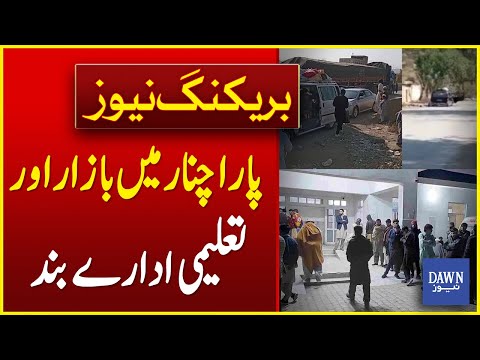
ڈان اخبار اداریہ: ’کرم کے حالات پر قابو نہ پایا گیا تو فرقہ وارانہ تنازعات ملحقہ اضلاع میں پھیل سکتے ہیں‘
خیبرپختونخوا کے قبائلی ضلع کرم میں گزشتہ چند ماہ سے صورت حال عدم استحکام کا شکار ہے، ایسے میں جمعرات کو پیش آنے والا ہولناک واقعہ حیران کُن...
-
جنرل مشرف کی نسبت جنرل کیانی زیادہ پراعتماد نظر آئے آخر کار جنرل پرویز مشرف نے آرمی چیف کا عہدہ چھوڑدیا اور پاکستان فوج کی کمان ایک گ...
-
shafiqueahmed110.com - Articals form Saleem Safi, Hamid Mir, snt Babar Awan, Imran Khan and others READ THE ARTICALS FROM VIREOUS WRITER

